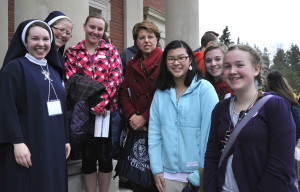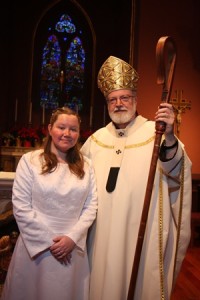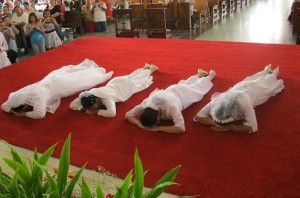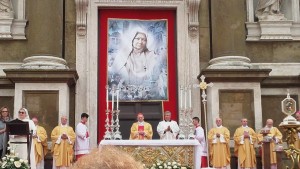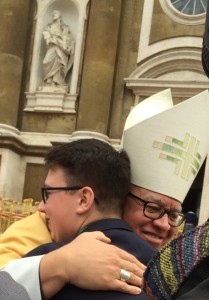
A recent article on Zenit mentions that at the closing ceremony for the Year of Consecrated Life were many consecrated virgins.
In 1970, the year that the decree Ordo consecrationis virginum was published, there were only a few consecrated virgins. Today, according to a 2015 survey, there are over 4000, found mostly in Europe and the Americas.
This description from the Information packet that was on the Order of Consecrated Virgins website, describes the beauty of the life very succinctly:
A consecrated virgin, after renewing her resolve of perpetual virginity to God, is set aside as a sacred person who belongs only to Christ. The acting agent in the Consecration is God Himself who accepts the virgin’s promise and spiritually fructifies it through the action of the Holy Spirit.
This sacramental is reserved to the bishop of the diocese. The consecrated virgin shares intimately in the nature and mission of the Church–she is a living image of the Church’s love forher Spouse while sharing in His redemptive mission.
The consecrated virgin living in the world embodies a definitive vocation in itself. She is not a quasi-Religious,nor is she in a vocation that is in the process of becoming a Religious institute or congregation. Nevertheless, she is a consecrated person, with her bishop as her guide. By virtue of the Consecration, she is responsible to pray for her diocese and clergy.
The consecrated virgin living in the world, as expressed in Canon 604, is irrevocably “consecrated to God, mystically espoused to Christ and dedicated to the service of the Church, when the diocesan bishop consecrates [her] according to the approved liturgical rite.”
The Holy Father’s prayer intentions for the month of January as well as reflections by Fr. James Kubicki, S.J., National Director of the Apostleship of Prayer.
Care for Creation.That we may take good care of creation–a gift freely given–cultivating and protecting it for future generations.
Life is a gift. Our very existence is a gift. We did not create ourselves nor are we chance products of blind forces of nature. And we are not God.
That may seem obvious, but from the beginning of human history, people have tried to be God. We see that even today in the way human beings use creation in ways that are contrary to God’s will. According to Genesis 2: 15, humanity was created to work with God, “to cultivate and care for” the earth. Pope Francis wrote in his encyclical Laudato Si: “Once we lose our humility and become enthralled with the possibility of limitless mastery over everything, we inevitably end up harming society and the environment. It is not easy to promote this kind of healthy humility when we exclude God from our lives or replace him with our own ego and think that our subjective feelings can define what is right and what is wrong.”
This month we begin Lent, a time of conversion. Let’s consider how we can
be humble stewards and not exploiters of creation. As a start, Pope Francis proposes we simply “stop and give thanks to God before and after meals.” Doing so “reminds us of our dependence on God for life; it strengthens our feeling of gratitude for the gifts of creation; it acknowledges those who by their labors provide us with these goods; and it reaffirms our solidarity with those in greatest need.”
EVANGELIZATION INTENTION
Asia. That opportunities may increase for dialogue and encounter between the Christian faith and the peoples of Asia.
Early last year Pope Francis visited the Asian country of Sri Lanka where four major religions coexist: Buddhism, Hinduism, Islam, and Christianity. Unfortunately ethnic and religious differences there have led to bloody conflicts. Meeting with representatives of these religions, the Pope said: “For the sake of peace, religious beliefs must never be allowed to be abused in the cause of violence and war. We must be clear and unequivocal in challenging our communities to live fully the tenets of peace and coexistence found in each religion, and to denounce acts of violence when they are committed.”
All people are made in the image and likeness of God. God created everyone for eternal life—to be with God in the heavenly communion of saints. God desires this so much that he sent Jesus to shed his precious blood for the salvation of all. Thus all people are to be shown respect.In his speech, Pope Francis spoke of the importance of “dialogue, which is essential if we are to know, understand, and respect one another.” True dialogue requires honesty: “for such dialogue and encounter to be effective, it must be grounded in a full and forthright presentation of our respective convictions. Certainly, such dialogue will accentuate how varied our beliefs, traditions and practices are. But if we are honest in presenting our convictions, we will be able to see more clearly what we hold in common. New avenues will be opened for mutual esteem, cooperation, and indeed friendship.”
In true dialogue with non-Christians, we Christians need to listen respectfully, find common ground, and then in our turn to share the Gospel, in hopes that the Holy Spirit will open hearts to Jesus. We pray this month that opportunities for such sharing may increase in Asia, where Christians are in the minority.
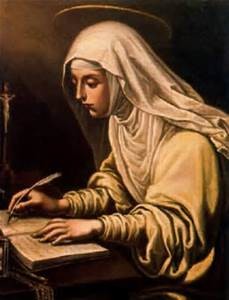
The Dominicans Nuns of Marbury, Alabama, have recently posted on their website The Canticle of the Passion, or the “Passion Verses.” It is a specifically Dominican devotion traditionally sung on the Fridays of Lent. A compilation of texts from Sacred Scripture that pertain to the sufferings of Our Lord Jesus Christ, this devotion was revealed by the Blessed Virgin Mary to St. Catherine de Ricci (1522-1590), a cloistered Dominican Tertiary of the 16th century. Today is her Feast Day!
“Our Lady is said to have desired Catherine, when she revealed this Canticle to her, to spread it through the convent as a form of prayer and contemplation supremely pleasing to our Lord. The venerable confessor, Fra Timoteo, wrote it out in full at the saint’s dictation and submitted it for the approval of the Order. Padre Francesco di Castiglione had then become general, and he was not satisfied with allowing its use in San Vincenzio. By a circular letter to all monasteries of the Province he ordered it to be placed amongst the regular devotions and forms of prayer peculiar to the Dominicans; and it has remained celebrated amongst us, under the title Canticle of the Passion, as a monument to the tender love of our great Dominican saint, Catherine de Ricci, for her crucified Jesus” (from St Catherine de’ Ricci : Her Life, Her Letters, Her Community by Florence Mary Capes, p. 76-77).
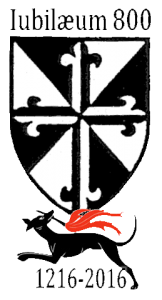
The Dominicans are celebrating their 800th anniversary this year!
Like St. Francis, St. Catherine de Ricci experienced the stigmata and for 12 years, every Thursday Noon until Friday at 4:00 pm, accompanied Jesus in His Passion. The Canticle of the Passion was revealed to Catherine immediately after her first great ecstasy of the Passion. Our Lady desired Catherine to spread it as a form of prayer and contemplation pleasing to Our Lord.
The Canticle of the Passion is sung to the haunting tones of their Dominican chant, leading them to enter more deeply into the solemn mysteries of this season of Passiontide and Holy Week.
If you go to their website, you can hear a recording of the The Canticle of the Passion sung by the nuns. Pictorial meditations are included and the Latin verses are translated into English.
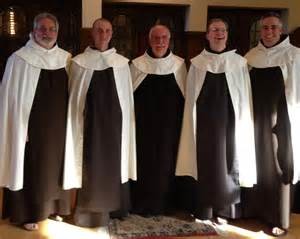
The Discalced Carmelite Friars of the Province of the Immaculate Heart of Mary were recently welcomed as a new IRL Affiliate Community. The Province was established by German Bavarian friars in 1906 and has responsibility for the well-known shrine of Our Lady Help of Christians in Hubertus, Wisconsin, commonly known as Holy Hill. The province includes monasteries in Milwaukee, Brighton, MA, Washington, DC and Kenya.
The Carmelite Friars follow the Rule of St. Albert of 1206. Each day, two hours are set aside for silent prayer. The Holy Mass and the Liturgy of the Hours chart the rhythm of every day which also includes community meetings and recreation. The three linchpins of their life are: prayer, community and the apostolate.
The friars also staff the Institute of Carmelite Studies. If you are looking for a good book about or by Edith Stein, St. John of the Cross, St. Teresa of Avila, Bl. Elizabeth of the Trinity, St Therese of Lisieux and other Carmelite greats, look no further.
Carmel has its roots in the desert for the first friars were found in Israel on Mount Carmel. Keeping up the eremitic tradition, in 1968, the Province established a community of hermits in Hinton, West Virginia.
They welcome men who seek to dedicate their lives to this life of contemplative prayer united to apostolic zeal. They need young, spirited, creative men, strong in faith who want to work in areas neglected by the world.
“In our day, there is a great spiritual hunger, yet many are bewildered and lost, cut off from the sustaining food of eternal life. We who have received a precious heritage see our special mission in the world to be helping any who need help on their way to God.”
For more information, contact Fr. Elijah of the Eucharist, OCD, vocation director (ocdvocation@gmail.com) or 262-628-1838.
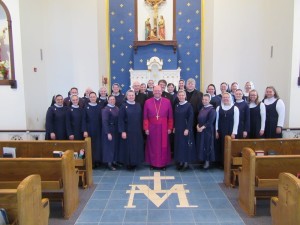
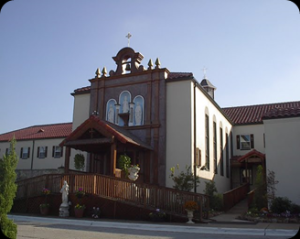
In November of 2015, the Sisters of the Immaculate Heart of Mary moved into their new home, a 32-bedroom Novitiate House of Formation in Colwich, Kansas, on the site of the former Simon horse ranch. The convent, chapel and altar were blessed by Bishop Carl Kemme on December 8, 2015.
The sisters bought the property in 2012 so that they could house all of their sisters under one roof. Previously, the sisters had been living in smaller convents throughout Wichita and did not have a place to gather as a community.
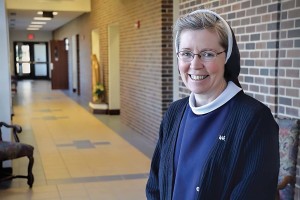
Mother Mary Magdalen, IHM
“We had no chapel large enough for us to be able to pray in together,” said Mother Mary Magdalen O’Halloran. “We had no dining room large enough for us to take our meals together; we had no room where we could meet for community meetings, days of recollection, conferences, or recreation. In addition, we were quickly running out of bedrooms.”
The new novitiate has a chapel, community dining room and assembly hall. In the future, the Motherhouse will be built as the next phase of the building plan. They have the fortunate situation of needing most of the bedrooms in the Novitiate already for they have had five young women enter their community since the building began and another entering this month as a postulant.
The sister’s primary apostolate is to educate the young in the Catholic faith. Thus, they will retain two of their current convents at St. Joseph Parish and Holy Cross Parish for use during the school year. They also are active in the St. Paul Student Center at Wichita State University. The sisters “first” apostolate though is to contemplate the Word and to pray and work for the conversion of sinners and the sanctification of priests.
Their founder, Fr. Joaquin Masmitjá (1808-1886), said, “Thus the Sisters would instruct others, especially young women, in the Catholic faith so that they in turn might become the instruments for instructing and strengthening others, and in this fashion rebuild the foundations of morality in a society weakened by its divorce from religion.” As it says on their website and how true it is: “An honest look at our world today will testify to the need for our charism among the young.”
“We’d been planning and waiting for this day for 39 years, since we arrived in the Wichita diocese,” said Mother Mary Magdalen. “It was a monumental day for us.”
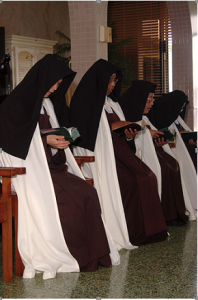
The Discalced Carmelite Nuns in Dallas, Texas, are one of the newest IRL Affiliate Communities. Their monastery, the Monastery of the Infant Jesus of Prague and of St. Joseph, was founded in 1928 by ten refugee nuns who arrived from Mexico due to the revolution and religious persecution. They arrived from the Carmel in Tulancingo, Hidalgo, Mexico, which was founded in 1907.
The Dallas Carmelites are a cloistered contemplative community, totally dedicated to Christ in a community atmosphere of unity and constant prayer. Their daily life is centered around the Eucharistic Sacrifice of Jesus—daily Mass, from which they receive the grace to live up to their calling. The hours pass in an alternating rhythm between prayer and manual labor. Simplicity of life, the silence and solitude of a hermit, the support of a loving community, all help to keep their goal in focus: “to be alone with Him alone.” They follow the 1990 Constitutions for Discalced Carmelite Nuns which requires that they celebrate the entire Divine Office every day in choir.
The Servant of God Rev. John A. Hardon, S.J., was the spiritual director of the current Prioress, Sr. Juanita Marie of Jesus Crucified. She spoke to him on the phone just thirty minutes before his death. She now seeks to lead the community with members that are a “living witness of a life consecrated to Christ that serves the Church through the hidden fruitfulness of Faith and self-sacrificing Love.”
Daily Mass at 7:00 am every day is open to the public. The Confraternity of the Holy Face meets every third Sunday at 3:30 pm and is also open to the public.
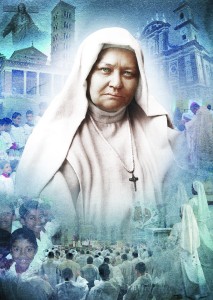
Last October, a group of forty-one pilgrims consisting of sisters, their relatives, priests and lay people from the Diocese of Youngstown made a pilgrimage to Italy for the beatification of Mother Maria Teresa Casini, foundress of the Oblate Sisters of the Sacred Heart of Jesus, which took place on October 31, 2015.
Mother Casini founded the Oblate Sisters in 1894 in Grottaferrata. Their charism is to pray for the sanctification of priests and the holiness of the Church. Mother was beatified in the Frascati cathedral where she was baptized in 1864, two days after her birth.
For the Oblate Sisters from Hubbard, Ohio, this was an extra-special event because the miracle required for Mother’s beatification occurred in their own diocese. In 2003, five-year-old Jacob Sebest of Campbell, Ohio, was diagnosed with irreversible brain damage after a swimming pool incident. Two days later, on the feast of the Sacred Heart of Jesus, after intense prayer to the Sacred Heart of Jesus through the intercession of Mother Teresa Casini, young Jacob miraculously awoke from a medically induced coma without any signs of brain trauma. Today he is a healthy, vibrant 17-year-old and a senior in High School.
The day before the beatification, the pilgrims visited Grottoferrata where Mother first established the congregation and where she later died in 1937. They prayed before the historical tabernacle that depicts her vision of the Pierced Heart of Jesus. They also venerated a relic, a braid of Mother’s hair that was cut off when she made her first profession of vows. Unbeknownst to her, said Sr. Joyce Candidi, O.S.H.J., it was preserved “by those who sensed that one day she would be recognized for her great love and heroic virtues.”
Jacob and Bishop Murray
Jacob and his family were able to make the trip to Italy and greet the Holy Father in Rome after the beatification along with the General Superior and General Counselor of the Oblate Sisters. On the Feast of All Saints, Pope Francis said: “(Mother Teresa Casini) was a contemplative woman and missionary; she made her life an offering of prayer and concrete charity in support of priests. Let us thank the Lord for her witness!”
On November 2nd, Bishop George Murry, S.J., celebrated Mass for the pilgrims in the crypt of St. Peter’s Basilica at the site of St. Peter’s tomb where they gathered to pray in thanksgiving once again for the life and holiness of Blessed Mother Teresa Casini. After the return home, one pilgrims observed, “As each day goes by, it continues to sink in that we experienced life-changing, as well as once-in-a-lifetime events.”
The Diocese of Youngstown is planning to celebrate Mother Casini’s beatification on Sunday, May 22, 2016, at St. Columba Cathedral.
Today the Church celebrates the feast of the Angelic Doctor, St. Thomas Aquinas. This great saint struggled against the wishes of his family to fulfill his vocation as a member of the Order of Preachers and went on to be an esteemed academic, saint and Doctor of the Church.
St. Thomas Aquinas has had a profound impact on the Church, particularly with regards to his studies in Philosophy and Theology. As a student, Thomas studied under St. Albert the Great and eventually went on to receive his doctorate in Theology from the University of Paris. His academic work has proven to be immensely influential and has received great praise and admiration. Pope Leo XIII even spoke of St. Thomas Aquinas in Aeterni Patris stating, “like the sun he heated the world with the warmth of his virtues and filled it with the splendor of his teaching.”
His academic work as a Dominican, however, almost did not occur due to his family’s opposition. At the age of nineteen, St. Thomas entered the fledgling community of the Order of Preachers in Naples. His family was distressed because they did not believe that a noble like Thomas should join a mendicant order and desired that he enter the renowned Abbey of Monte Cassino where a kinsman was Abbot. His brothers, imperial soldiers, captured St. Thomas on his way to Cologne and confined him to the castle of San Giovanni at Rocca Secca where they sought to tempt him away from his vocation. After two years, his family relented and he was released allowing him to profess vows in Rome.
After professing vows, St. Thomas went on to have an exceptional academic career though, after experiencing a time of ecstasy at Mass, he ceased to write saying, “I can do no more. Such secrets have been revealed to me that all I have written now appears to be of little value” St. Thomas’ academic work has proven to be tremendously significant, however, and he is now considered the patron of students and universities. His persistence to fulfill his vocation and search for Truth, makes him an extraordinary figure for students.
The IRL is committed to promoting universities that provide strong formation in Catholic spirituality as students discern their vocation and obtain a college degree. Several colleges in the United States are affiliated with the IRL and provide a Catholic setting where students can seek Truth.
Are you a 20-something young woman discerning if God is calling you to religious life or to married life? Or seeking to follow His will more closely? A Franciscan Sister of Christian Charity, Sr. Jacqueline Spaniola, is offering a silent retreat, March 11-13, 2016, based on the Spiritual Exercises of St. Ignatius.
The Spiritual Exercises are a timeless and always useful “exercise” to guide you in the spiritual life as you seek to do God’s will. Most free time will be spent in blissful silence in order to pray and to ponder how God is working in your life. The retreat begins Friday, March 11th, at 6 p.m., and ends after a noon meal on Sunday, March 13th. The retreat is being held at the Franciscan Sisters of Christian Charity’s beautiful Motherhouse in Manitowoc, Wisconsin. For more information call or text 920-323-9632. Register for the retreat here.
The Franciscan Sisters of Christian Charity foundation dates back to 1866 when 5 young women, inspired by St. Francis of Assisi’s simple way of living, banded together to form a small community dedicated to teaching religious education amongst the scattered parishes in the area. By 1872, there was such a growth in the number of sisters that property was purchased on the shores of Silver Lake, the current site of the Holy Family Motherhouse. Today, they serve in education, healthcare and outreach to the poor.
If the retreat dates do not work for you, please let them know, and they will try to schedule alternate dates and invite other young women to join you.
For more information, please contact Sr. Julie Ann Sheahan, OSF, at sjulieann@fscc-calledtobe.org or address: 2409 S. Alverno Road, Manitowoc, WI 54220.
“My vocation was a surprise when I first became aware. Over the years of saying yes to the call to religious life, my life has been one of purpose, meaning and satisfaction.”
You can now support the gift of religious life by simply shopping online! The Institute on Religious Life recently registered with the AmazonSmile Foundation which will allow friends of the IRL to aid our mission when purchasing items through smile.amazon.com.
Supporting the Institute on Religious Life through AmazonSmile is easy. When visiting the site, customers are prompted to select an eligible charitable organization. Simply select the Institute on Religious Life from this list and start shopping. The AmazonSmile Foundation will then donate a portion of the purchase price to the Institute on Religious Life.
It is important to note that this offer is only valid through smile.amazon.com and not amazon.com. Though the AmazonSmile Foundation was founded by Amazon, the Institute on Religious Life only receives donations from eligible purchases through AmazonSmile. Amazon does, however, pay all expenses of the AmazonSmile Foundation; which means that 100% of donation amounts generated by purchases on AmazonSmile go to the Institute on Religious Life. In other words, all donations generated from your purchases go directly towards promoting and supporting the gift of religious life, not the AmazonSmile Foundation.
As we conclude the Year of Consecrated Life and continue with the Jubilee Year of Mercy, please consider supporting the Institute on Religious Life as we strive to support and promote the gift of consecrated life. Thanks to the AmazonSmile Foundation, donating to the IRL has never been easier!